- Why Has E-Invoicing Become Essential for Businesses?
- What Is Accounting Software Compatible with E-Invoicing?
- E-Invoicing Software vs. Integrated Accounting Software
- When Does Your Business Need Accounting and E-Invoicing Software?
- Key Features to Look for in Accounting Software Compatible with E-Invoicing
- 1. Easy Electronic Invoice Creation
- 2. Tax Invoice and QR Code Support
- 3. Automated Tax and Discount Calculations
- 4. Integration with General Ledger Accounts
- 5. Customer and Supplier Management
- 6. Inventory Integration
- 7. Point of Sale (POS) Integration
- 8. Actionable Financial Reporting
- Why Choose Cloud Accounting Software?
- Why Businesses Need ERP Instead of Standalone Accounting Software
- Manzuma: Accounting and E-Invoicing Within One ERP Platform
- How Manzuma Simplifies E-Invoicing
- Simplify Accounting with Integrated Financial Management
- Connect Invoicing and Inventory Management
- Smarter Reporting and Business Analytics
- Monjez AI: Your Intelligent Business Assistant
- More Than Software—A Better Way to Run Your Business
- Start Your Free Trial Today
- FAQs
- Do I need accounting software if I already use an e-invoicing system?
- What is the difference between cloud accounting software and traditional accounting software?
- Can Manzuma connect invoices to inventory?
- Is Manzuma suitable for small and medium-sized businesses?
- Can I try Manzuma before subscribing?
Accounting is no longer just about recording numbers in spreadsheets or bookkeeping systems. As businesses grow and e-invoicing requirements become more advanced, having accounting software compatible with e-invoicing has become essential for any company that wants to operate efficiently, accurately, and at scale.
The goal is not simply to issue electronic invoices. More importantly, invoices should be integrated into a complete business ecosystem that includes sales, customers, inventory, taxes, payments, reporting, and financial management. This is where the difference becomes clear between a basic invoicing tool and a comprehensive accounting solution that gives you full visibility into your business operations.
In this guide, we’ll explore why e-invoicing-compatible accounting software is essential, the key features you should look for, and how Manzuma helps businesses manage accounting, invoicing, inventory, and reporting through a single ERP platform.
Why Has E-Invoicing Become Essential for Businesses?
E-invoicing is no longer just a regulatory or tax requirement. It has become a core part of digital transformation initiatives across businesses of all sizes.
Instead of relying on paper invoices, scattered records, and time-consuming manual processes, companies now need structured digital invoices that can be tracked, archived, shared, and connected directly to their financial systems.
A modern e-invoicing solution does much more than store invoices. It captures every transaction detail, including customer information, products or services, taxes, discounts, payment methods, collection status, and inventory impact.
That is why choosing accounting software compatible with e-invoicing helps businesses reduce errors, streamline operations, and gain greater visibility into revenue, expenses, and profitability.
What Is Accounting Software Compatible with E-Invoicing?
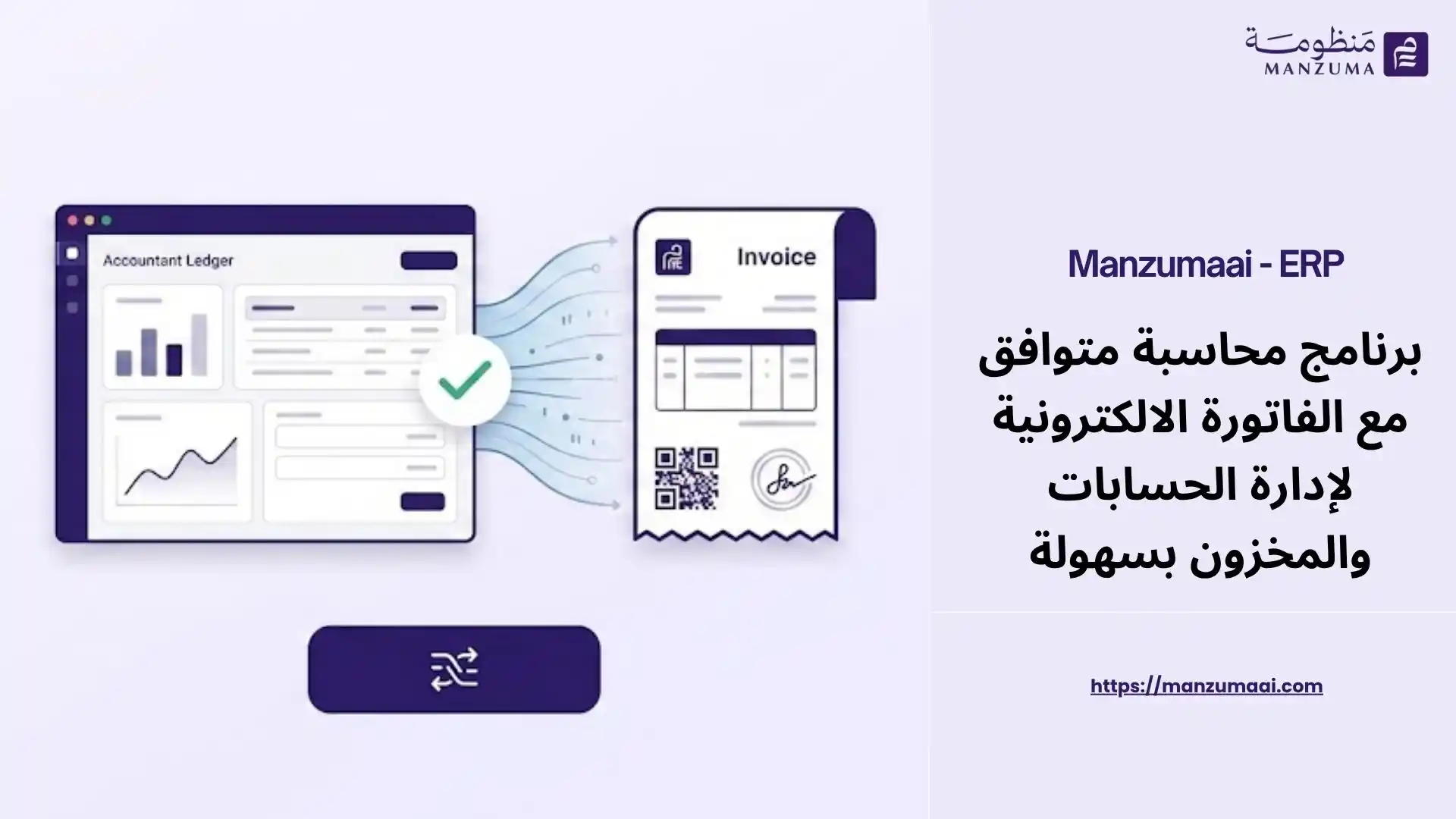
E-invoicing-compatible accounting software is a system that allows businesses to create and manage electronic invoices while automatically connecting them to general ledger accounts, customer records, suppliers, taxes, payments, and financial reports.
In simple terms, when a sales invoice is created, there is no need to manually record the transaction elsewhere. The system automatically updates accounting entries, calculates taxes, adjusts customer balances, and reflects the transaction in reports.
This is the key distinction between a standalone invoicing application and a complete accounting and invoicing solution designed to support business growth.
E-Invoicing Software vs. Integrated Accounting Software
Many businesses start with simple invoicing tools. While these may work initially, they often become insufficient as transaction volumes increase.
Basic e-invoicing software focuses primarily on generating, sending, and storing invoices. Integrated accounting software treats every invoice as part of a broader financial and operational workflow.
A complete accounting system enables businesses to:
- Generate electronic and tax invoices.
- Manage customer and supplier accounts.
- Automatically create accounting journal entries.
- Track VAT and discounts.
- Connect invoices to inventory and sales operations.
- Monitor payments and overdue invoices.
- Generate financial and management reports.
- Access real-time financial insights.
For businesses planning long-term growth, choosing accounting software with e-invoicing capabilities as part of a complete ERP system is often the smarter investment.
When Does Your Business Need Accounting and E-Invoicing Software?
Your business may need a more advanced accounting solution if financial data is becoming difficult to track, teams are entering the same information multiple times, or invoice management is consuming too much time.
Common signs include:
- Manual invoice creation takes too long.
- Tax calculations are handled manually.
- Customer and supplier information is disorganized.
- Inventory is not updated immediately after sales.
- Financial reports require extensive manual preparation.
- Branches or warehouses operate on separate systems.
- Management lacks visibility into sales and collections.
- Accounting, inventory, and sales figures frequently differ.
At this stage, cloud accounting software compatible with e-invoicing becomes a business necessity rather than an optional upgrade.
Key Features to Look for in Accounting Software Compatible with E-Invoicing
1. Easy Electronic Invoice Creation
The system should allow users to quickly create invoices by adding customers, products, services, pricing, taxes, discounts, payment terms, and delivery methods without unnecessary complexity.
A streamlined invoicing process improves productivity for both sales and finance teams.
2. Tax Invoice and QR Code Support
A reliable e-invoicing system should support essential tax invoice requirements, including seller information, customer details, invoice numbers, tax calculations, totals, and QR codes where applicable.
Built-in compliance features help reduce errors and ensure invoice accuracy.
3. Automated Tax and Discount Calculations
Manual tax calculations are one of the most common sources of invoicing errors.
The right accounting software should automatically calculate VAT, discounts, subtotal amounts, and final invoice totals, helping businesses improve accuracy and efficiency.
4. Integration with General Ledger Accounts
An invoice should do more than generate a document. It should automatically update customer accounts, revenue records, taxes, and payment tracking.
This integration reduces duplicate data entry and improves financial accuracy.
5. Customer and Supplier Management
Effective accounting software should provide instant access to customer and supplier information, including outstanding balances, payment history, overdue invoices, and account status.
This information is essential for collections management and cash flow planning.
6. Inventory Integration
For product-based businesses, invoice and inventory integration is critical.
Whenever a sale is recorded, inventory quantities should update automatically, reducing stock discrepancies and improving inventory control.
7. Point of Sale (POS) Integration
Retail stores, restaurants, and businesses that process direct sales benefit significantly from integrated POS functionality.
A connected POS system helps record transactions, update inventory levels, generate receipts, and synchronize data with accounting reports.
8. Actionable Financial Reporting
A quality accounting platform transforms raw data into meaningful business insights.
Businesses should have access to reports covering sales performance, profitability, expenses, customer activity, supplier management, outstanding invoices, cash flow, and inventory performance.
These insights support better decision-making and long-term growth.
Why Choose Cloud Accounting Software?
Cloud-based accounting software offers significantly greater flexibility compared to traditional on-premise systems.
Users can access invoices, accounting records, inventory information, and reports from any location and on any device.
This flexibility is especially valuable for businesses with multiple branches, remote teams, or management teams that require real-time visibility.
Cloud solutions also simplify software updates, reduce backup concerns, and scale more easily as businesses grow.
Why Businesses Need ERP Instead of Standalone Accounting Software
As organizations expand, departments become increasingly interconnected.
Sales impacts inventory. Inventory affects purchasing. Purchasing influences supplier management. Invoices affect accounting and reporting.
When each department uses separate software, duplicate records and inconsistent data often become major challenges.
ERP systems solve this problem by bringing all business functions together within a unified platform, ensuring every department works from the same source of truth.
That is why accounting software within an ERP environment delivers far greater value than standalone accounting applications.
Manzuma: Accounting and E-Invoicing Within One ERP Platform
Manzuma is more than traditional accounting software. It is a cloud-based ERP platform designed to help businesses manage sales, invoicing, accounting, inventory, HR, reporting, and POS operations through a single system.
Instead of relying on multiple disconnected applications, businesses can centralize all operations within one integrated environment.
Every transaction automatically updates related modules. Sales invoices affect customer balances and inventory. Purchase invoices update supplier records and expenses. Reports are generated directly from real operational data.
This makes Manzuma an ideal choice for businesses seeking accounting software compatible with e-invoicing while also requiring broader operational control.
How Manzuma Simplifies E-Invoicing
Manzuma enables businesses to create invoices, quotations, and sales orders through a simple and organized workflow.
The system automatically calculates taxes and discounts while allowing invoices to be shared via PDF, email, or WhatsApp.
Because invoicing is fully integrated with accounting and inventory management, every invoice becomes part of a complete business process rather than an isolated document.
Simplify Accounting with Integrated Financial Management
Manzuma provides a connected accounting environment where sales, purchases, and expenses automatically flow into financial reports and ledgers.
Businesses can monitor journal entries, trial balances, customer accounts, supplier balances, and payments while maintaining full visibility into financial performance.
Instead of waiting until month-end to identify issues, decision-makers can access real-time financial insights whenever they need them.
Connect Invoicing and Inventory Management
One of Manzuma’s strongest advantages is the seamless connection between sales and inventory operations.
When invoices are issued, inventory quantities can update automatically, helping businesses maintain accurate stock levels and reduce inventory-related errors.
This functionality is particularly valuable for retailers, distributors, restaurants, manufacturers, and multi-location businesses.
Smarter Reporting and Business Analytics
Data alone is not enough. Businesses need actionable insights.
Manzuma provides reporting tools that help organizations monitor sales performance, analyze expenses, evaluate profitability, track receivables, and measure overall business performance.
Because reports are generated from actual business transactions, managers gain reliable, real-time visibility into company operations.
Monjez AI: Your Intelligent Business Assistant
Manzuma includes an AI-powered assistant called Monjez that simplifies access to business information.
Users can request reports, analyze data, and retrieve insights directly from the system or through WhatsApp conversations.
Rather than navigating multiple dashboards and reports, business owners and managers can ask questions in natural language and receive answers based on real company data.
This makes accounting and business management faster, easier, and more accessible.
More Than Software—A Better Way to Run Your Business
Many companies struggle not because they lack data, but because their data is scattered across different tools and departments.
Manzuma brings invoicing, accounting, inventory, reporting, and operational workflows together in one centralized platform.
The result is less manual work, fewer errors, greater transparency, and improved business control.
Start Your Free Trial Today
If you are looking for accounting software compatible with e-invoicing, choosing a complete ERP platform can help your business achieve far more than regulatory compliance.
With Manzuma, you can manage invoicing, accounting, inventory, sales, and reporting from a single cloud-based platform powered by AI.
Start your free 14-day trial today—no credit card required.
FAQs
Do I need accounting software if I already use an e-invoicing system?
Yes. E-invoicing systems focus primarily on invoice generation, while accounting software manages financial records, journal entries, customer accounts, collections, inventory, and reporting.
What is the difference between cloud accounting software and traditional accounting software?
Cloud accounting software can be accessed from anywhere and is easier to update and scale. Traditional software is often tied to local servers or devices and typically requires more maintenance.
Can Manzuma connect invoices to inventory?
Yes. Manzuma integrates sales invoices with inventory and warehouse management, helping businesses track stock movements accurately.
Is Manzuma suitable for small and medium-sized businesses?
Yes. Manzuma is designed to support SMEs that need accounting, invoicing, inventory management, and operational control within a single platform.
Can I try Manzuma before subscribing?
Yes. Manzuma offers a free 14-day trial with no credit card required, allowing businesses to explore the platform before making a commitment.
Ready to Organize Your Business?
Try Manzuma free for 14 days — no credit card, no commitment.